

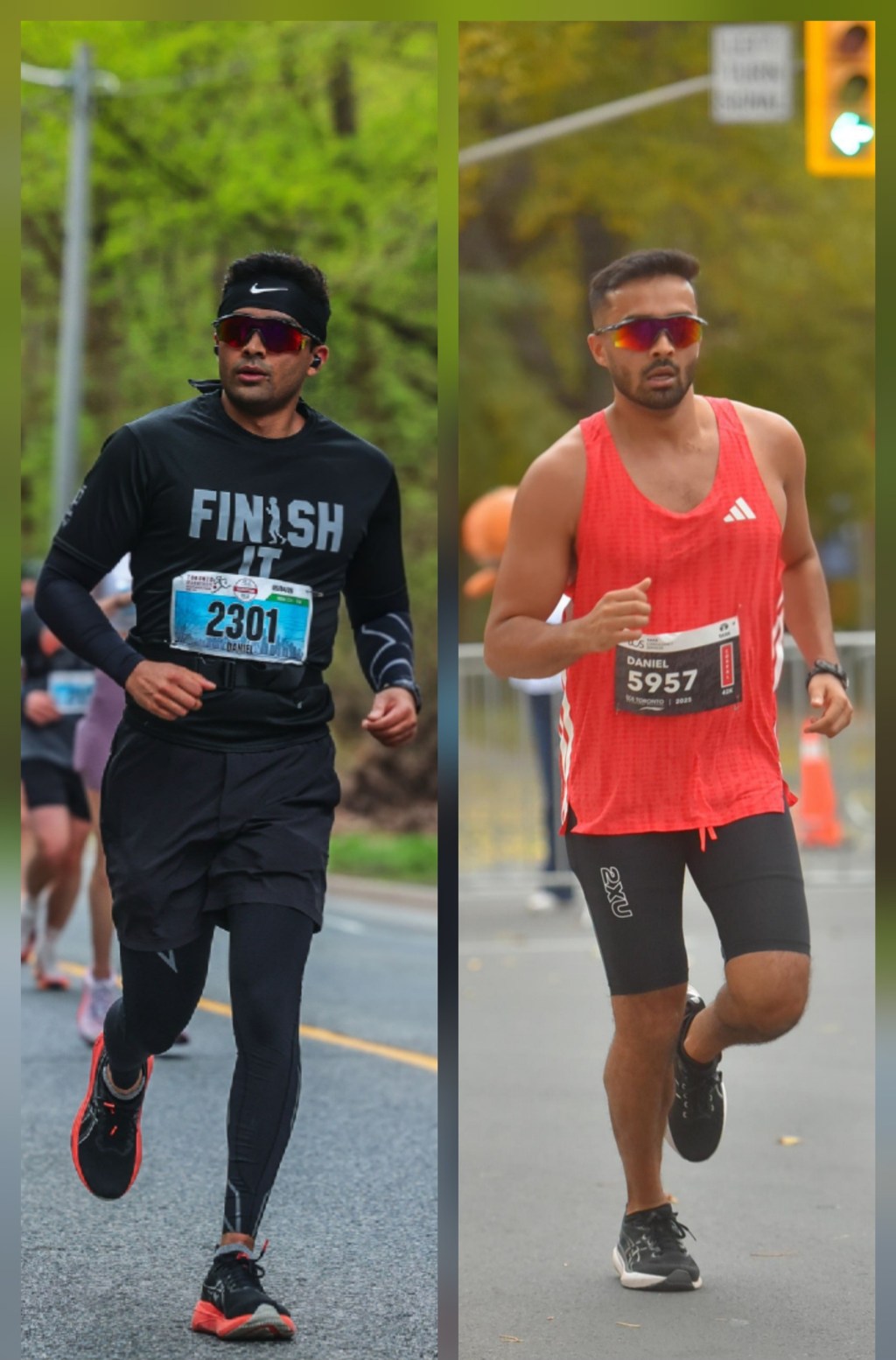
In 2025, I ran the May Toronto Marathon in 4:04 and the October Waterfront Marathon in 3:53. Here’s what training for these races taught me and what I’m running with into 2026.
In 2023 and 2024, I completed marathons with a combination of running/walking. In 2025, I set a goal to run the entire distance. Slow and steady wins the race, right?
To train for May 2025, I had to do something I’ve never done before.
Run through the Great Canadian Winter.
At first, I avoided running outside. I gave the treadmill three honest attempts and confirmed what I already suspected.
I’d rather watch paint dry.
Running through winter forced a choice. I could either keep attempting the treadmill, waiting for better weather and warmer days, or accept that progress wouldn’t come from comfort.
If I wanted to run the entire marathon, I needed consistency more than ideal circumstances. So I stopped fighting the season, leaned into the cold, and built my routine around what I enjoy most.
Sunset runs.
Those first few outdoor runs reminded me of something I’d forgotten. A younger part of me that once relished recess in −30°C weather, the exhilaration of scoring golazos in snoccer (snow soccer), and the long winter nights going bar down at the outdoor hockey rink (frozen pond).
If you know, you know.
What I loved most about winter training was simply being out there. There was less pressure to run fast than in the summer and showing up felt like a win. That feeling of accomplishment, just for getting outside, carried me farther than I expected.
42.2 kilometers, to be exact.
When summer arrived, new perspectives emerged that deepened my appreciation for endurance training.
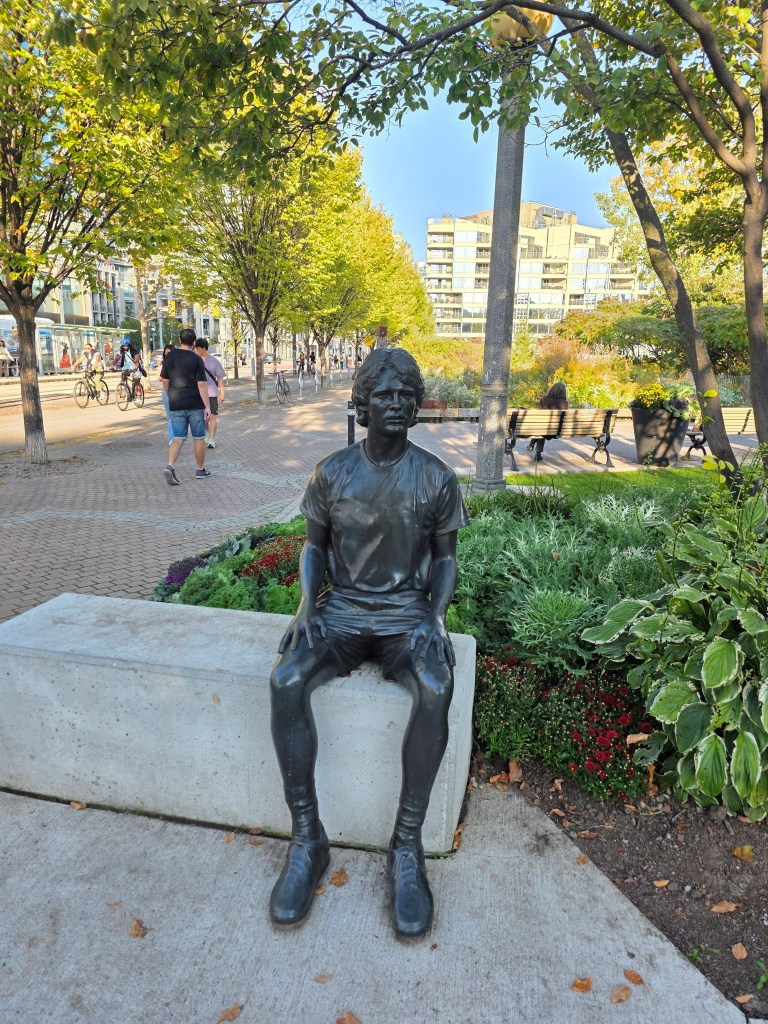
My usual summer route follows the Martin Goodman Trail along Toronto’s waterfront. There sits an art installation of Terry Fox titled Path to Hope: We Are Shaped by the Obstacles We Face.
I’ve reproduced part of the caption from the installation below:
“At the age of eighteen, Terry Fox (1958-1981) was diagnosed with bone cancer, which resulted in the amputation of his leg […]. In the spring of 1980, 21-year-old Terry Fox began his Marathon of Hope with a daunting goal of running across Canada […]. Terry ran nearly a marathon each day for 143 days […]. Over the 5,373 kilometres travelled, every step was a test, and every obstacle was a potential excuse to quit. Almost five months later, the only thing that could have stopped Terry from reaching the Pacific Ocean did. His cancer returned, this time in his lungs, and he was forced to stop on September 1, 1980. Terry died on June 28, 1981, at the age of 22. To this day, Terry’s perseverance, fortitude, altruism and sacrifice continue to inspire Canadians.”
Every time I pass this installation, I feel a rush of adrenaline. I always point at Terry to let him know he’s the man.
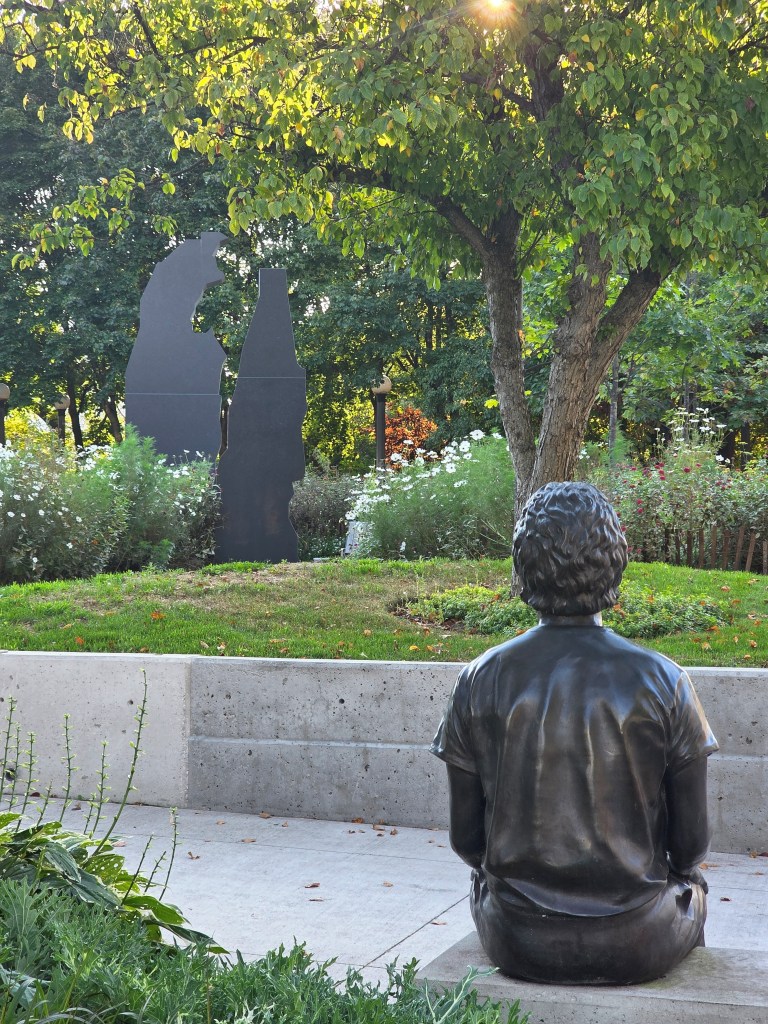
Terry is seated, facing west, looking toward a silhouette of himself running on one leg. To me, the artwork symbolizes something Terry had to do every single day of his Marathon of Hope:
Face his shadow.
Seeing Terry reminds me that endurance isn’t necessarily about the distance itself. It’s about the internal conversations that happen step after step. Those conversations stay with me long after the run ends.
Before my race in October, I read the following passage aloud:
“Through intentional practice, I developed the mindset that no obstacle in front of me is bigger than the will I have to conquer it. I wasn’t born with that will, I developed it by facing my own shadow. You must be willing to face your shadow, it is the one thing that follows you everywhere. Somedays you can’t see it, and you think you’ve outrun it, but it continues to reappear. Don’t be afraid to live in the grip of life. We all have the ability to create the life that we want. But to achieve that life you must be willing to confront yourself and your demons. That’s what it takes. There are no shortcuts on this journey.”
- David Goggins
If perception shapes effort and effort shapes endurance, then choosing how I face obstacles may be the most important training decision I make.
As I gear up for my second season of winter training, here are a few things I want to keep in mind.
- Face your shadow
- Focus on the fundamentals
- Find your why and have it at your fingertips
- Foster community: “If you want to go fast, go alone. If you want to go far, go together.”
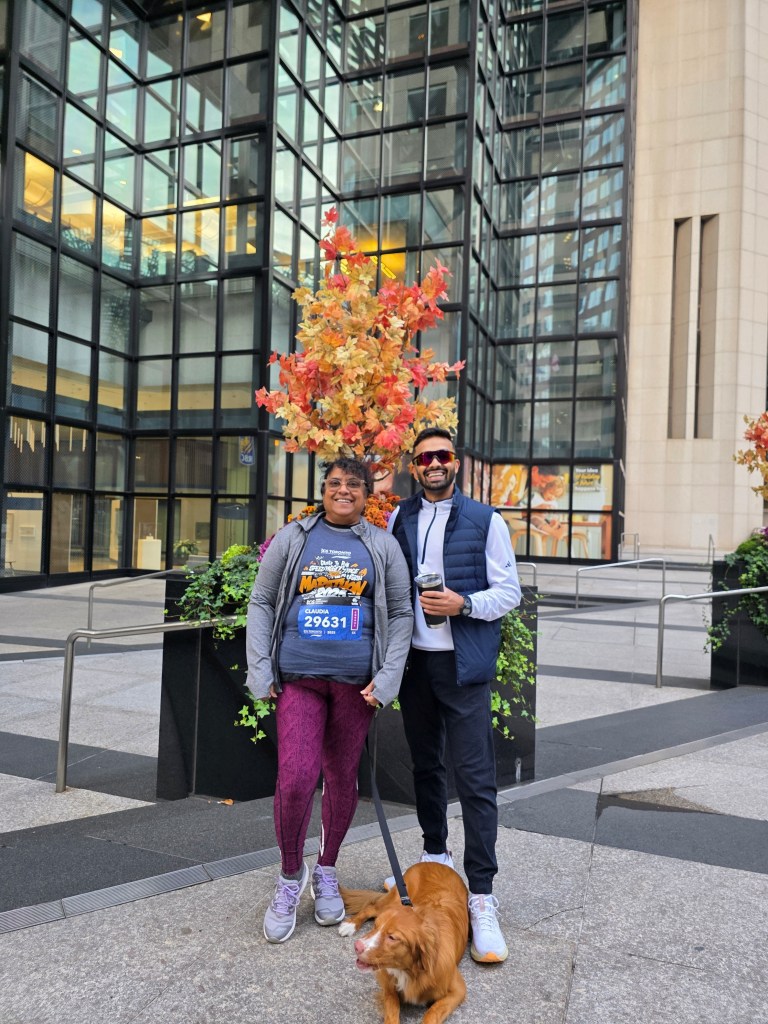
Special shoutout to my Mom, who at 60 completed her first 5K race. She continues to prove to me that perception shapes what is possible. Way to go, Mom!
With Care,
Daniel Nazareth

Please consider donating to the Terry Fox Foundation: Support Cancer Research – Terry Fox Foundation
 Daniel Nazareth's Blog
Leave a comment